




















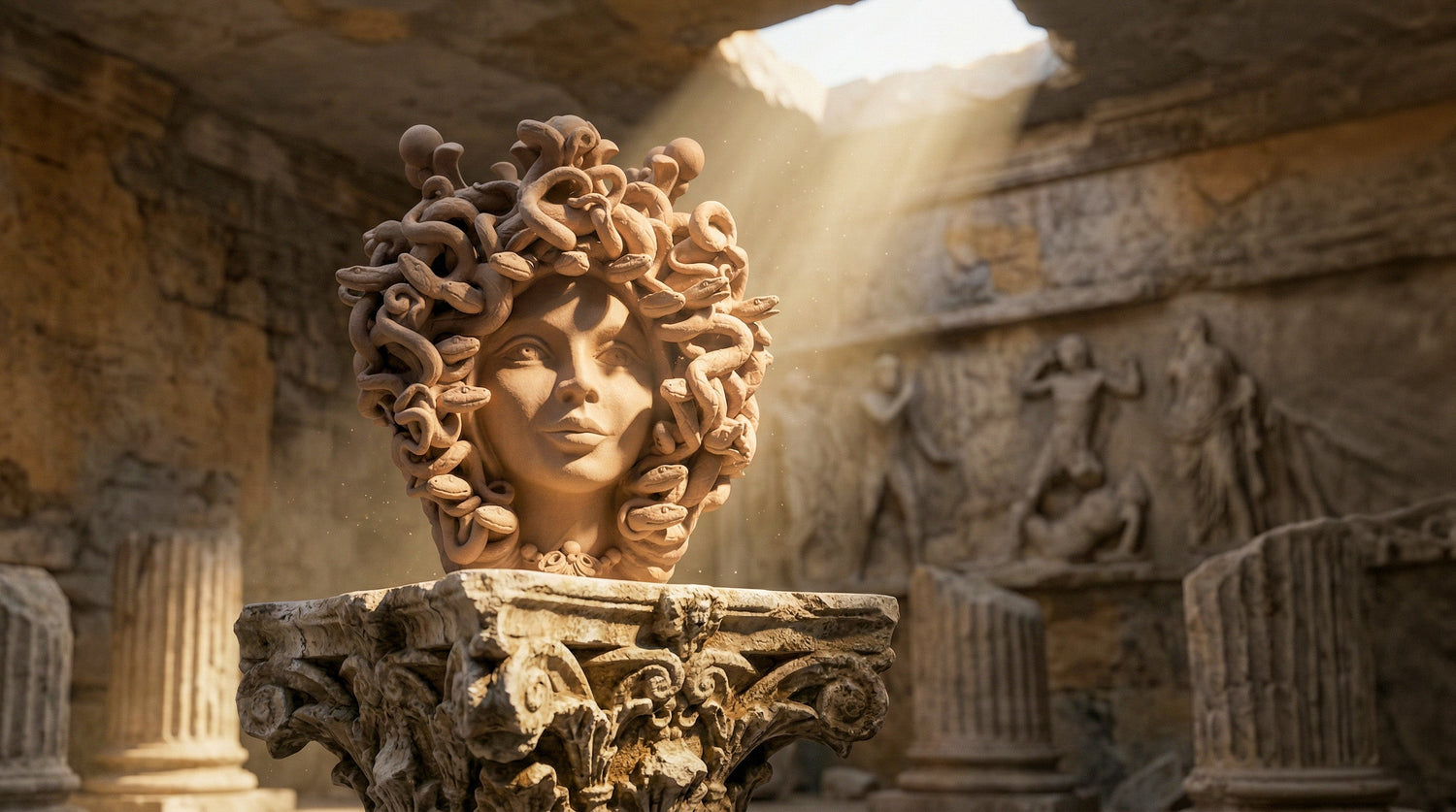
Greek mythology is rich in legendary figures, but few are as iconic as the creature with the serpentine face. The transformation of Medusa from priestess to Gorgon represents one of the most tragic and debated metamorphoses of classical antiquity.
It all began with a divine curse that turned her beauty into pure terror. This tale unfolds around three crucial moments: the origin of the punishment, the fatal clash with the hero Perseus, and the use of the severed head as a weapon of defense.
Together we will discover how this myth continues to profoundly influence our modern culture. To analyze the petrifying power of that gaze is to better understand the roots of terror and protection in the ancient world.
Divine Origins and Lost Beauty
To explore the story of Medusa means to immerse oneself in a world where beauty was often a condemnation. Long before being feared as a monster, the figure of Medusa was tied to an aesthetic perfection that attracted divine gazes and mortal envy.
The Lineage of Marine Deities
Medusa was no common creature, for she descended from an ancient and powerful lineage. Her parents were Phorcys and Ceto, primordial marine deities who embodied the dangers and mysteries hidden in the ocean's depths.
This genetic heritage placed her in a unique position within the Greek pantheon. To be the daughter of such archaic entities meant possessing a nature intrinsically linked to the power of the sea and its untamable force.

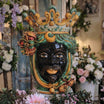
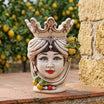
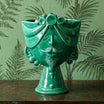
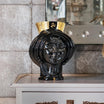
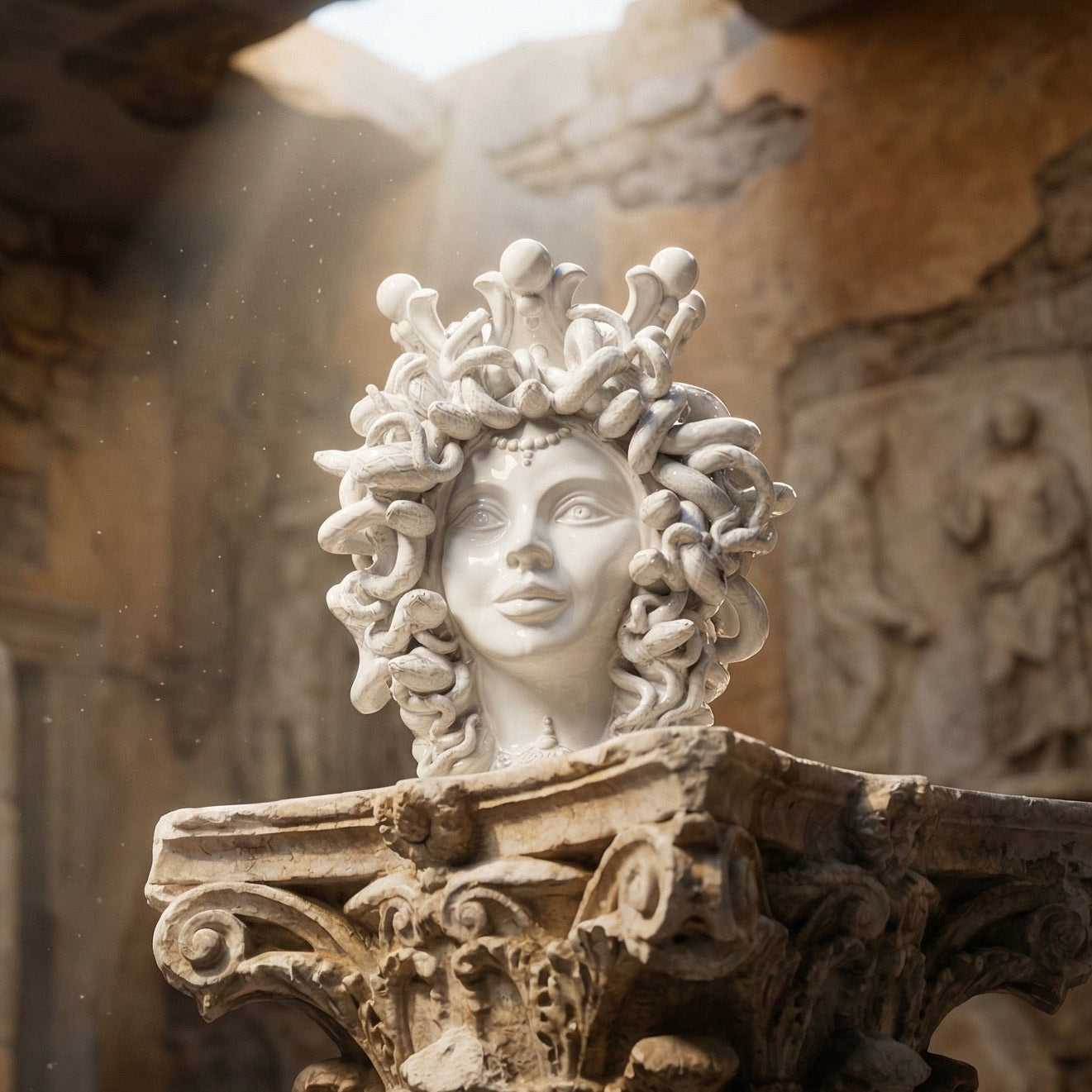
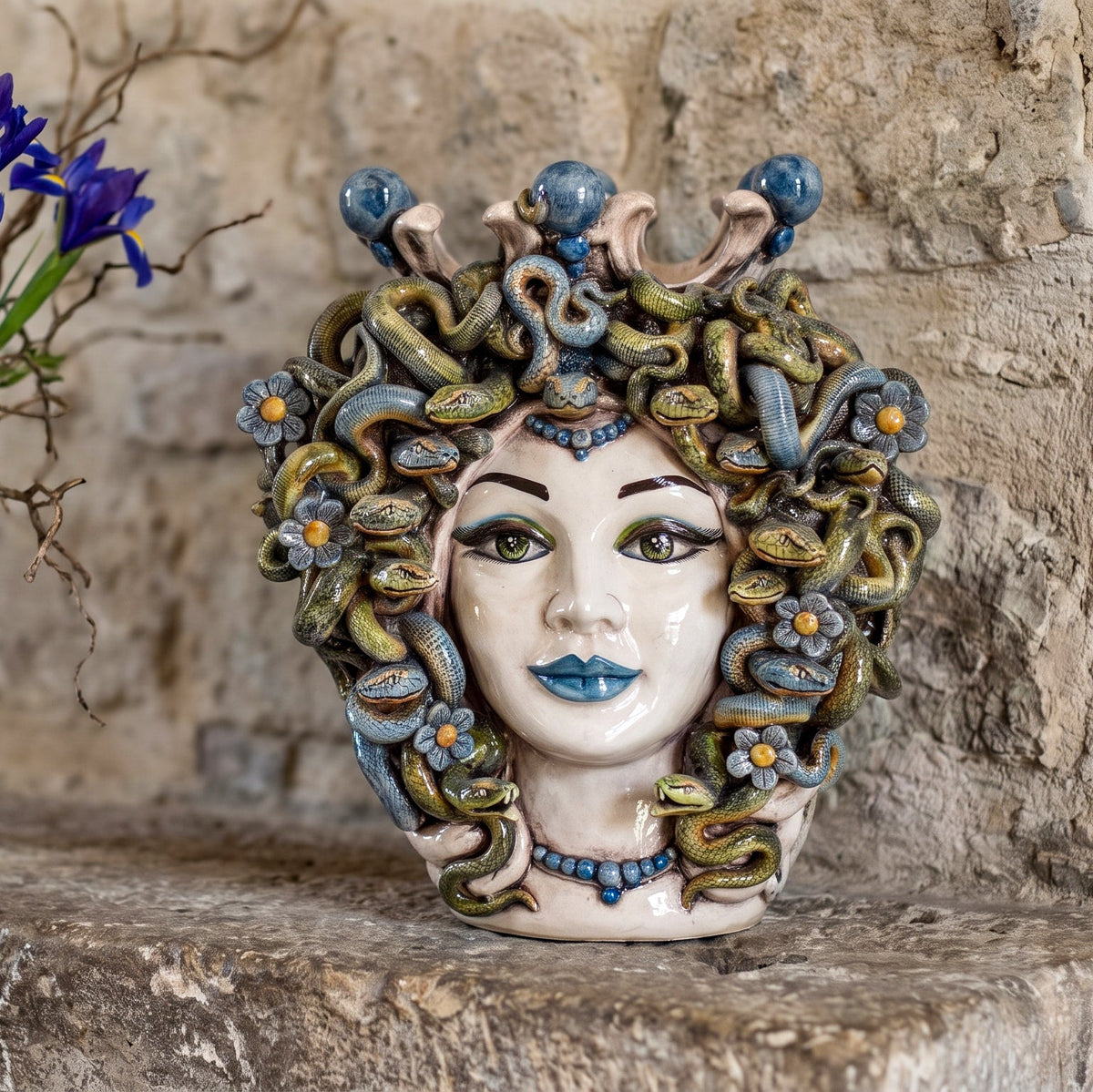
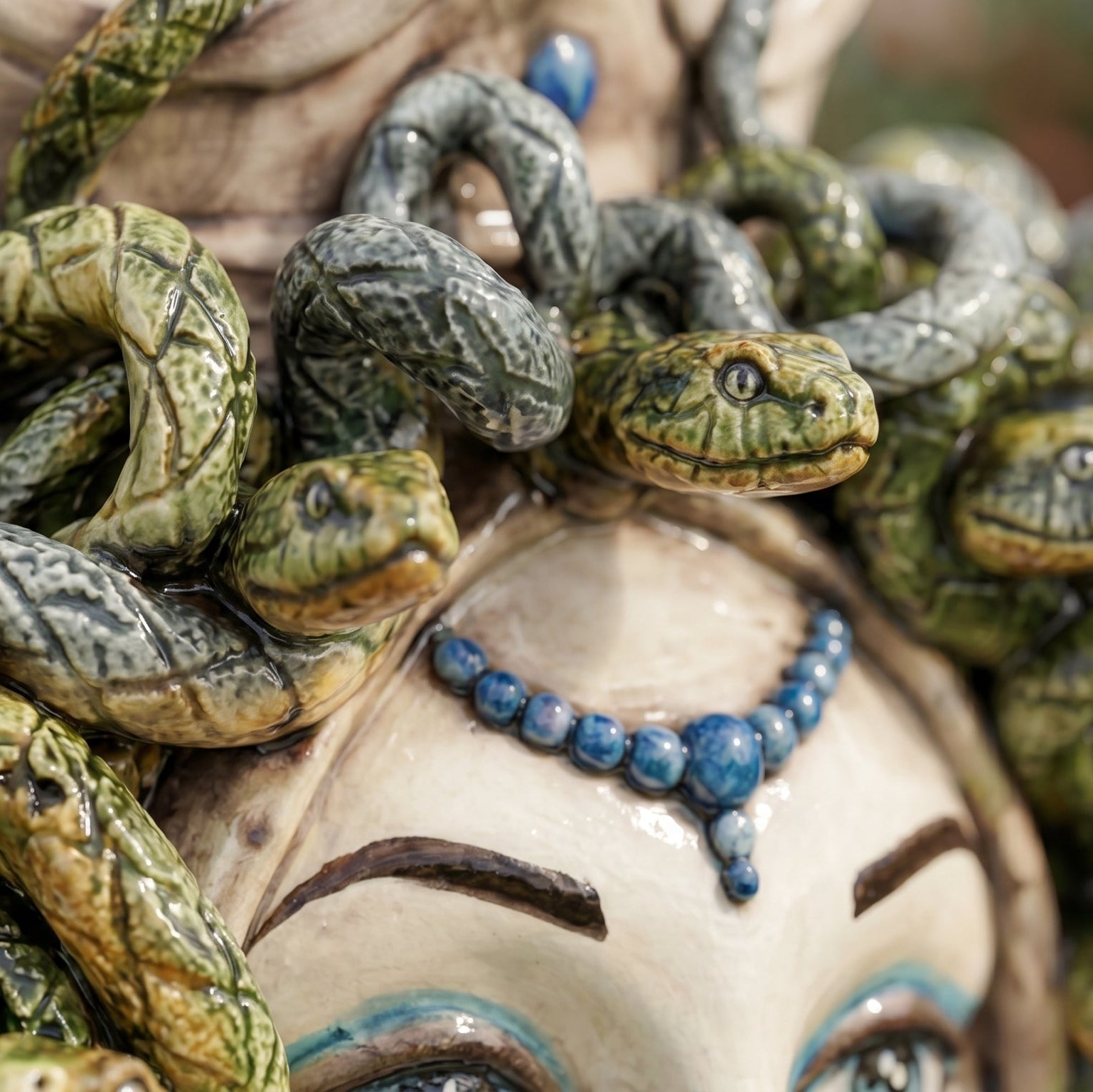
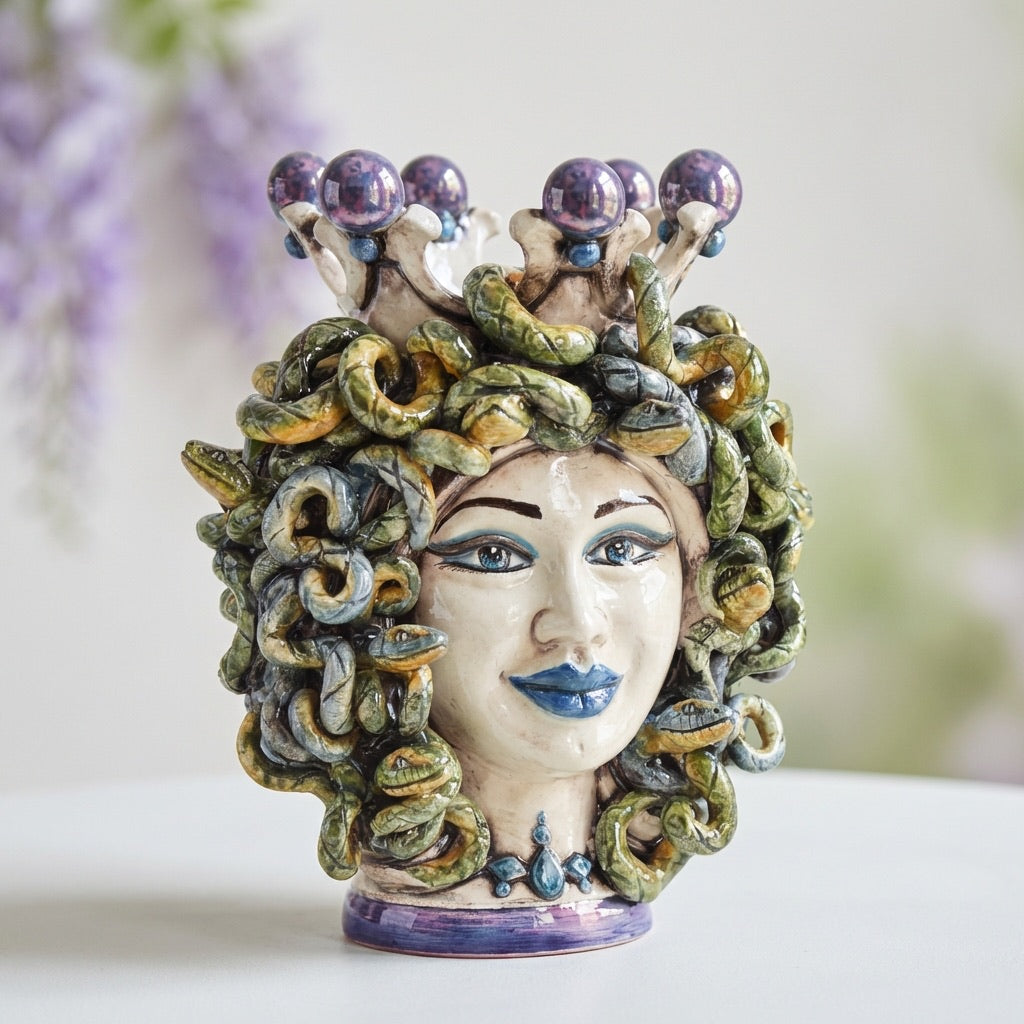
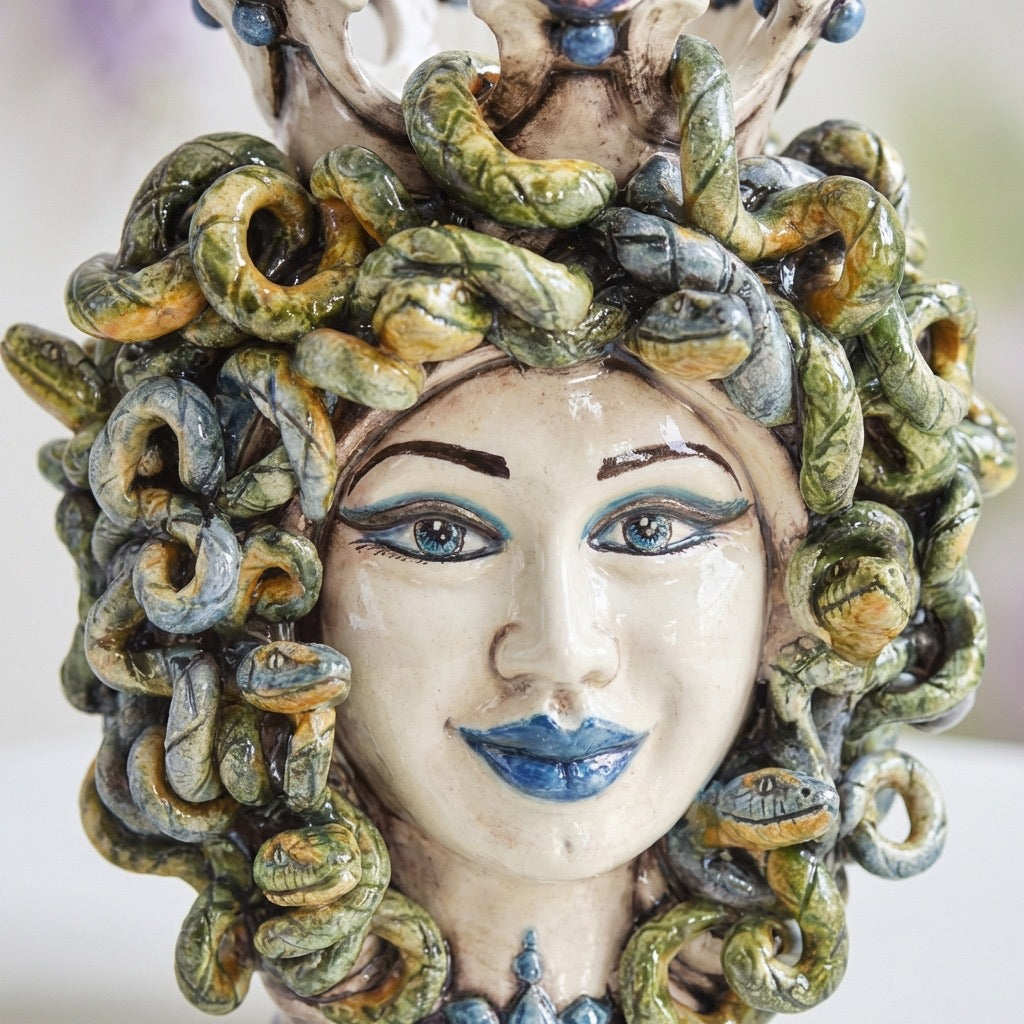
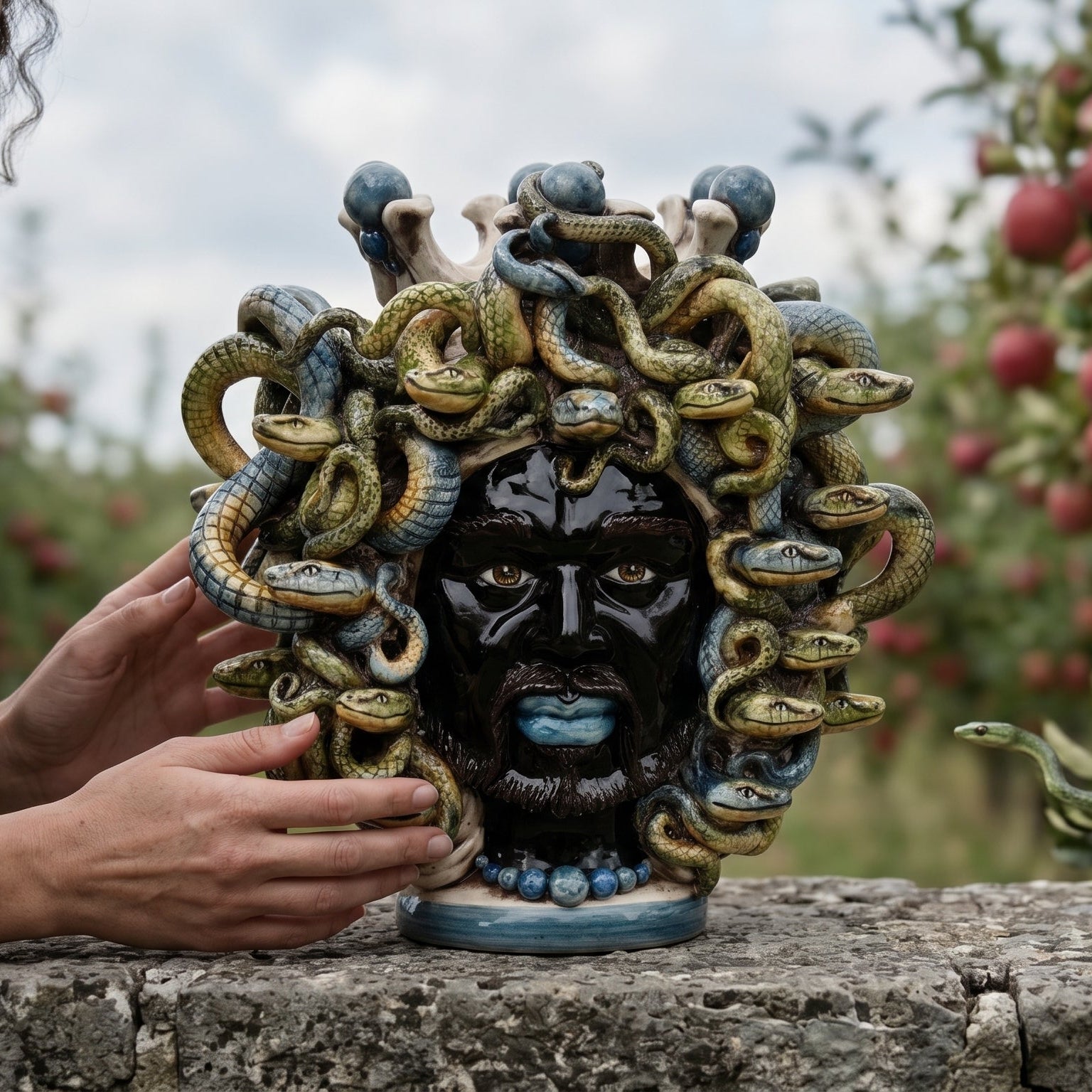
Medusa Head Vase with Blue Beads H 30 cm / 11.8", Antique Mother of Pearl – Testa di Moro from Caltagirone, Sicily
Acquista ora
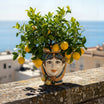
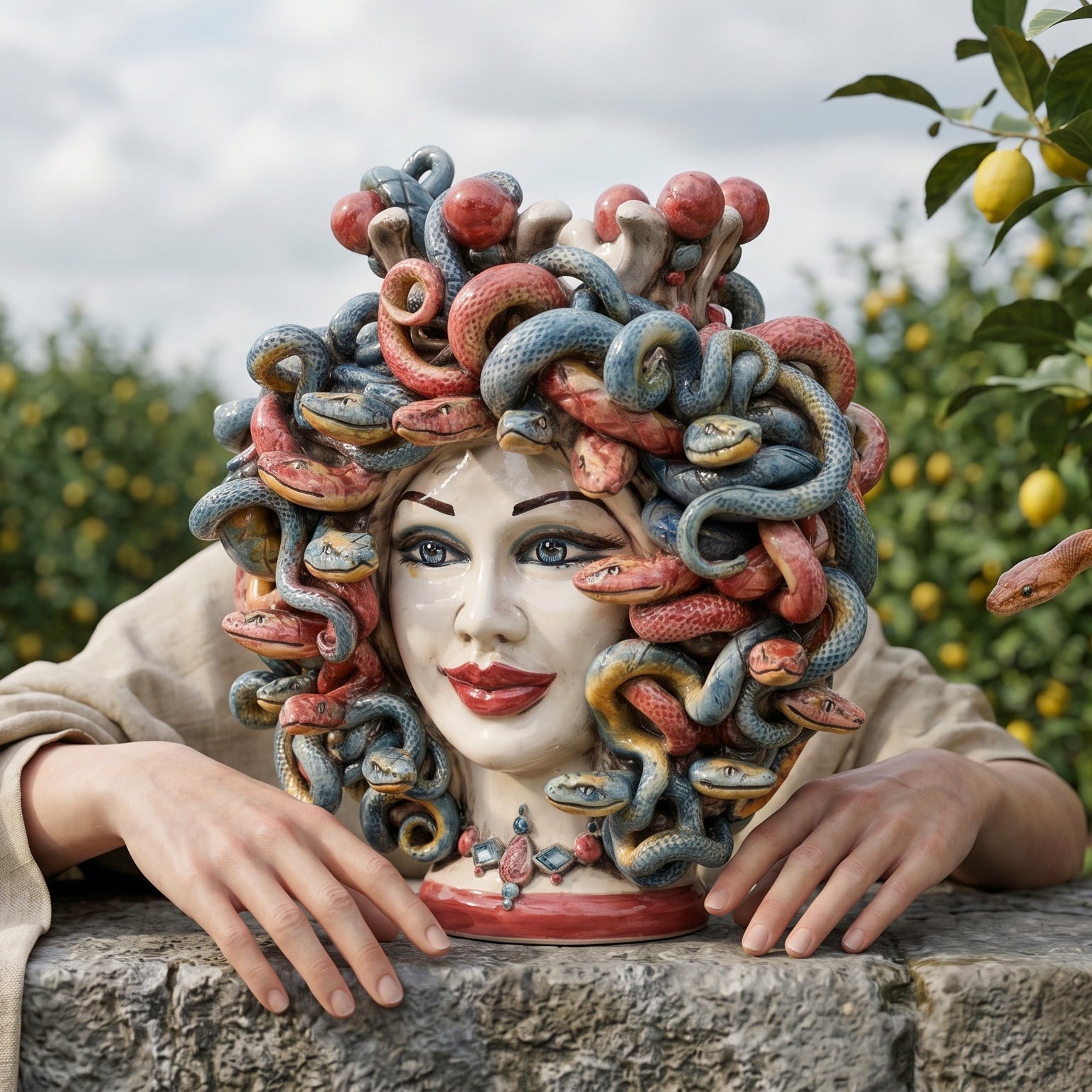
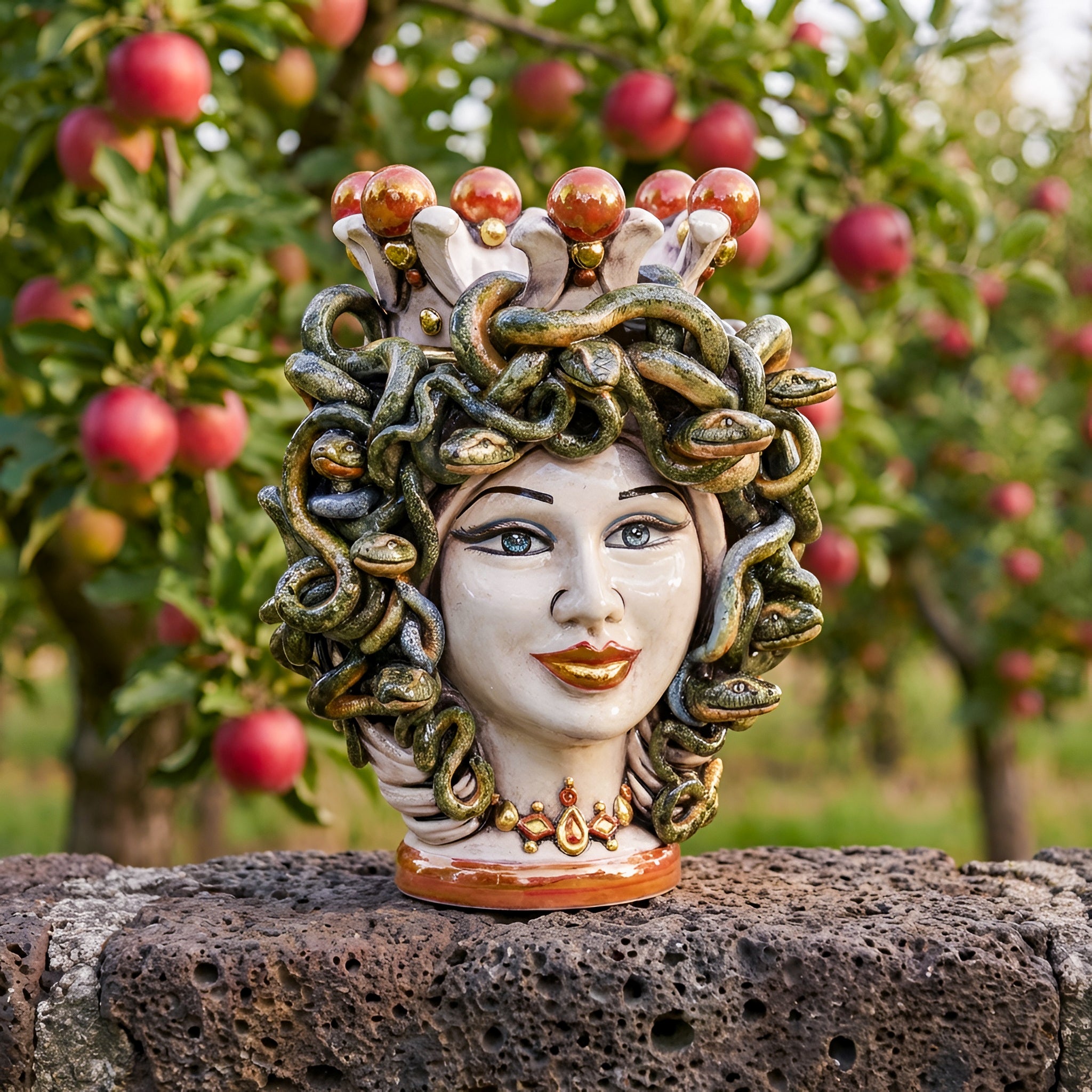
Medusa Head Vase H 38 cm / 15", Matte Taupe – Testa di Moro from Caltagirone, Sicily
Acquista ora
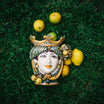
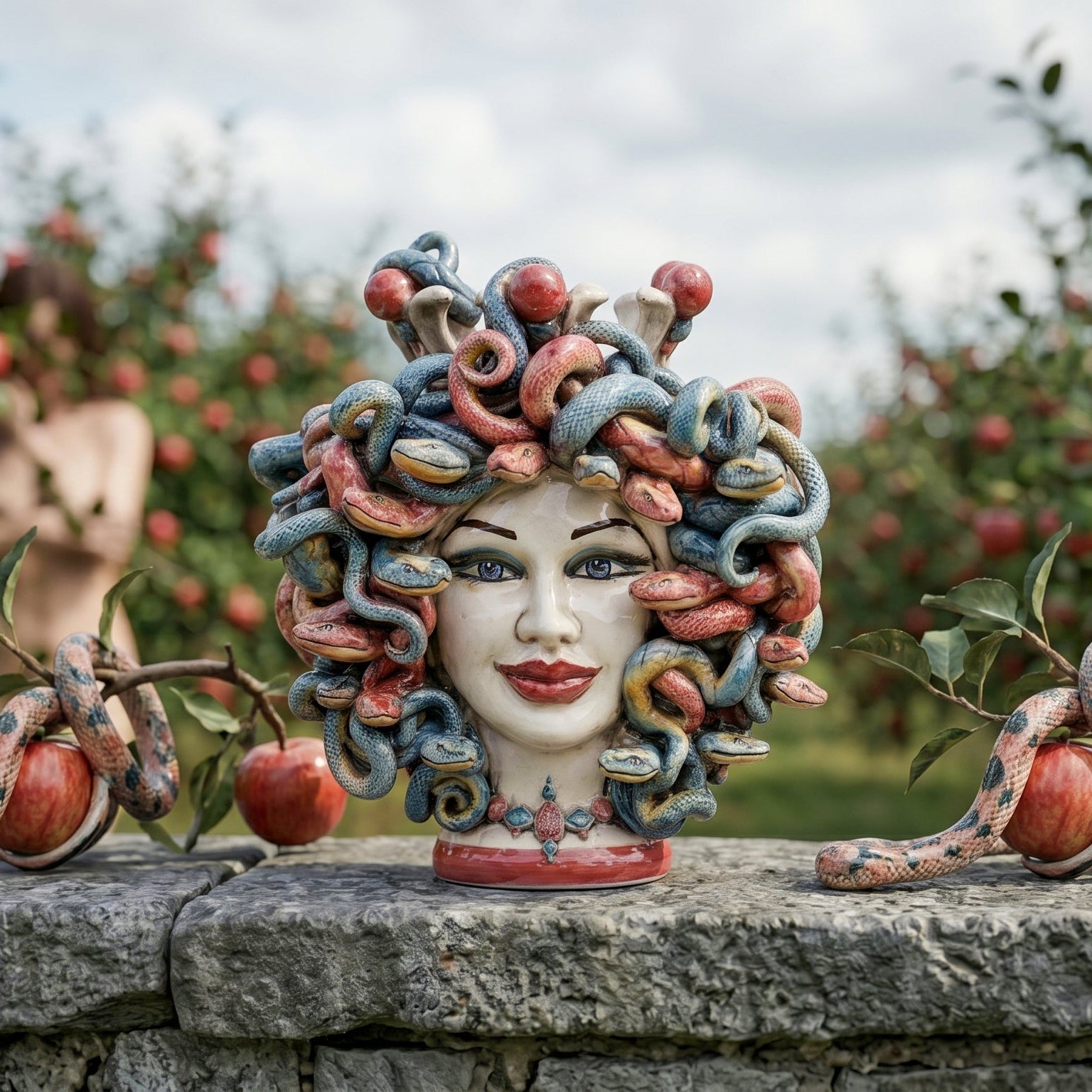
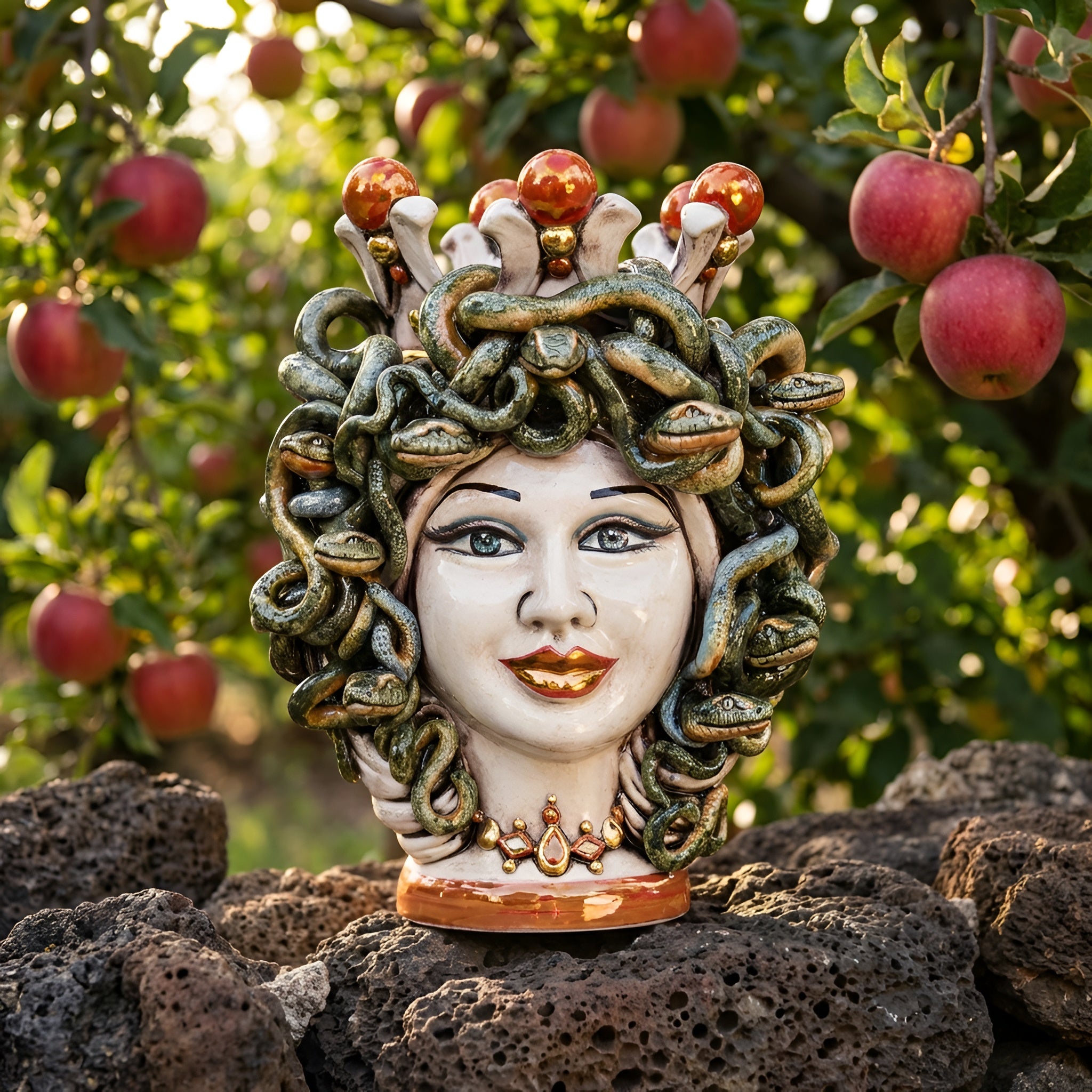
Medusa Head Vase with Bordeaux Beads H 25 cm / 9¾" – Testa di Moro from Caltagirone, Sicily
Acquista ora
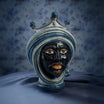
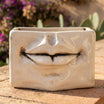
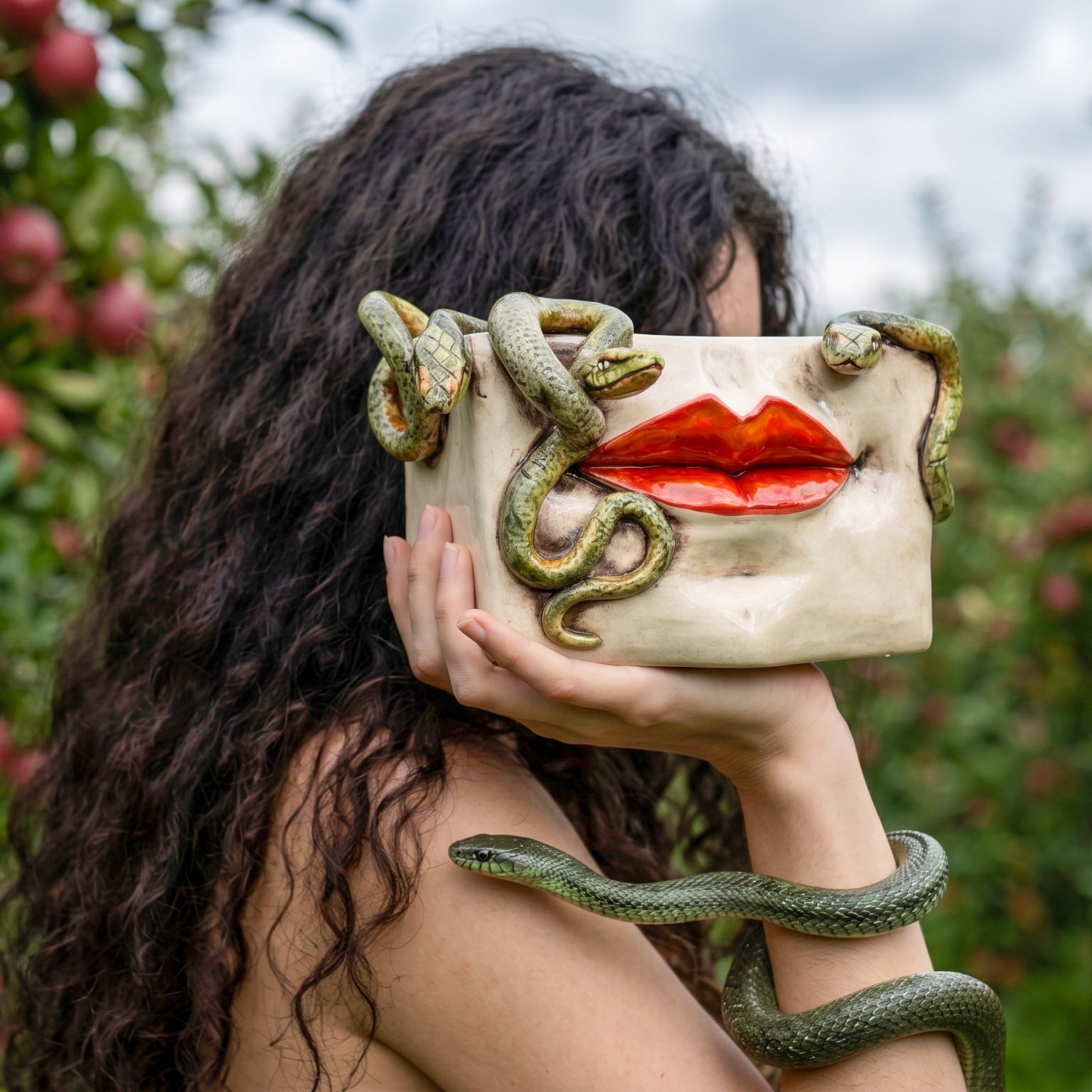
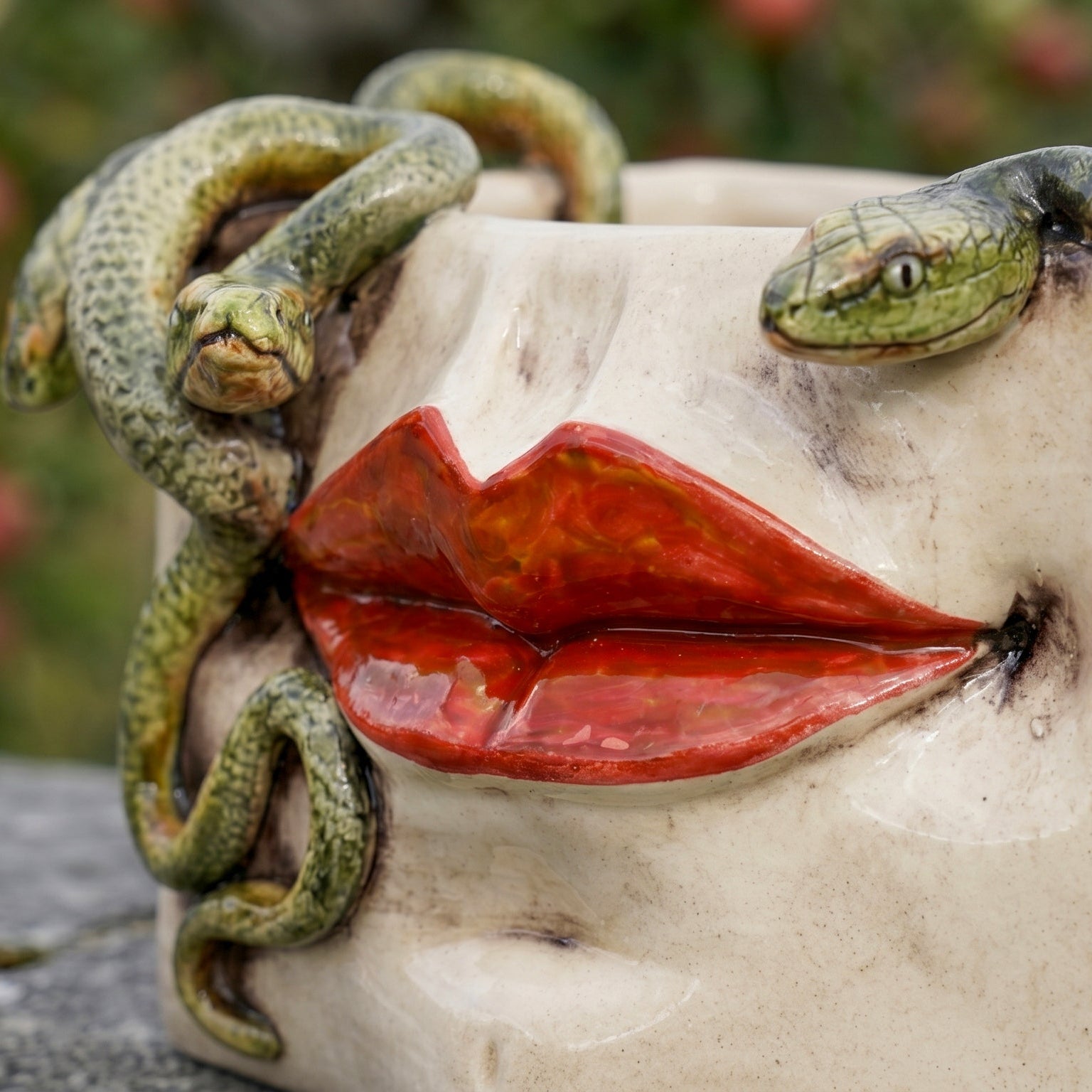
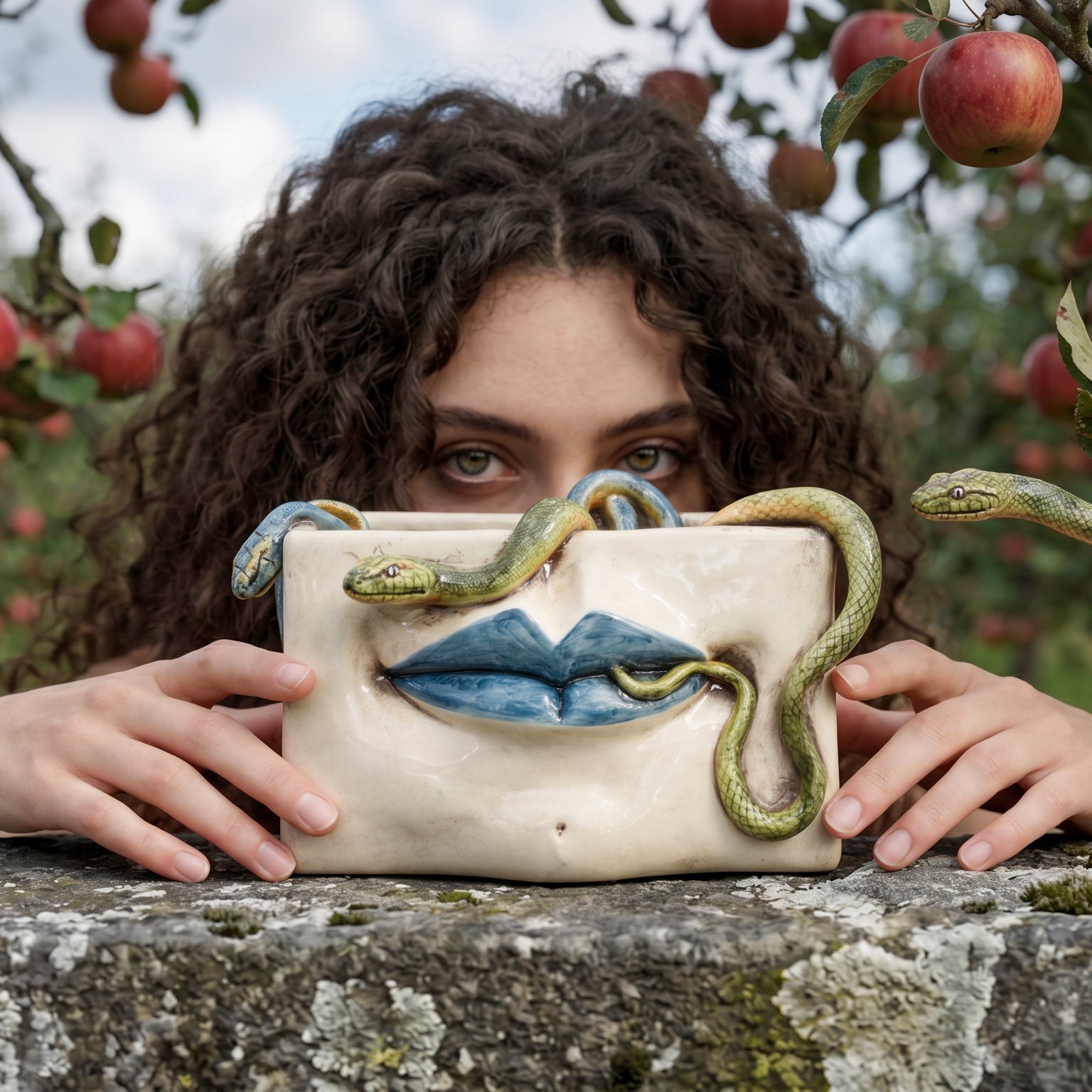
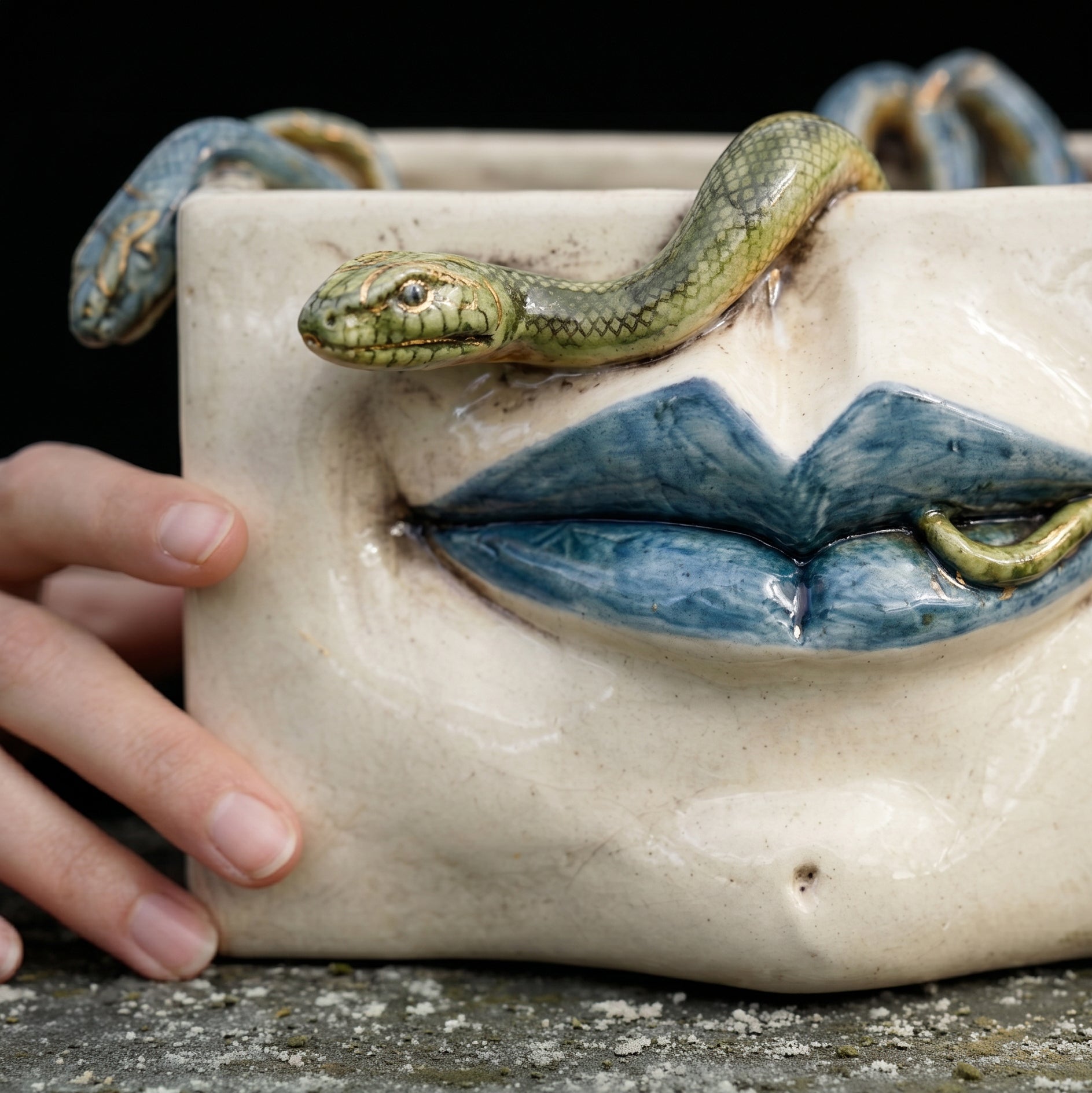
Caltagirone Ceramic Medusa Box — Gold and Lustre Lips, Applied Snakes, Antique Mother of Pearl
Acquista oraThe Beauty That Enchanted the Gods
The story of Medusa is marked by a beauty so extraordinary as to be almost dangerous. Her grace did not go unnoticed, attracting the attention of the gods of Olympus who often did not tolerate perfection outside their restricted circle.
In the ancient world, an impeccable physical appearance often represented the prelude to a destiny marked by suffering. Medusa's beauty soon became the catalyst for a series of tragic events that would forever change her existence.
| Name | Role | Origin |
|---|---|---|
| Phorcys | Sea god | Primordial deity |
| Ceto | Goddess of sea monsters | Primordial deity |
| Medusa | Daughter | Divine lineage |
The Transformation of Medusa from Priestess to Gorgon
The story of Medusa does not begin with terror, but with the purity of a priestly service carried out with extreme dedication. Before becoming the monster we all know, the young woman lived in an environment of silence and sacred respect.
The Role of Priestess in the Temple of Athena
Medusa was one of the most devoted priestesses in the temple dedicated to Athena. Her life was marked by daily rituals, prayers and the maintenance of the sacredness of the place. Her beauty was not only physical, but reflected the purity of a soul that devoted every moment to the goddess of wisdom.
The Forbidden Encounter with Poseidon
The young woman's fate changed drastically when Poseidon, the god of the sea, violated the peace of the temple. This forbidden encounter marked the definitive transition of Medusa from priestess to Gorgon, turning a place of worship into the stage of a tragic event. Athena's wrath, unleashed by the desecration, forever marked the woman's future.
| Characteristic | Life as a Priestess | Condition as a Gorgon |
|---|---|---|
| Place of residence | Temple of Athena | Remote island |
| Emotional state | Devotion and peace | Solitude and rage |
| Public perception | Venerated and admired | Feared and avoided |

Athena's Curse and the Sealed Destiny
The transformation of Medusa represents one of the darkest and most significant moments of Greek mythology. When the deity decided to punish her protégée, the ancient world witnessed a metamorphosis that would forever change the perception of the sacred and the monstrous.
The Divine Punishment
Athena's anger was not merely an act of justice, but a demonstration of absolute power. The goddess, feeling betrayed in her temple, chose to inflict a penalty that was visible and permanent, depriving the young woman of her identity.
This punishment reflects the cruelty of the power dynamics among the gods of antiquity, where humans often became pawns in greater games. There was no room for forgiveness, only for a condemnation that would isolate the victim from both human and divine company.
The Metamorphosis into a Monster
The physical change was radical and terrifying, transforming beauty into a symbol of pure terror. Her hair, once admired, became a tangle of venomous serpent hair, ready to strike at anyone who dared approach.
This metamorphosis brought devastating consequences for Medusa's life:
- Total exclusion from civil society and sacred temples.
- The loss of the ability to interact peacefully with other living beings.
- The acquisition of an appearance that instilled immediate fear in anyone who looked at her.
The final result was the creation of a solitary being, condemned to live on the margins of the known world. Her serpent hair became the indelible mark of a Medusa transformation that allowed no return, marking the beginning of a legend made of solitude and fear.
The Power of the Petrifying Gaze
What happens when life is suddenly turned to stone? The figure of the Gorgon is famous precisely for this supernatural ability that terrified heroes and adventurers for centuries.
The powers of Medusa represent one of the most fascinating and disturbing elements of all Greek mythology. This gift, or curse, acts as an impassable boundary between the world of the living and eternal immobility.
The Nature of Medusa's Power
The mechanism behind the petrifying gaze is instantaneous and fatal. Anyone who dares to meet the creature's eyes immediately loses their vitality, becoming a statue of cold and silent rock.
There is no escape for those who get too close, as the power requires no physical contact, only a visual connection. This characteristic makes the Gorgon a fearsome opponent, capable of annihilating any threat without moving a single muscle.
Why Stone? The Symbolism of the Vital Block
The choice of stone as the final outcome is not accidental, but charged with deep symbolic meaning. Stone represents the vital block, a sudden arrest of time and movement that transforms the dynamism of existence into a static form.
There are various interpretations of this phenomenon that we can summarize in a few key points:
- Emotional paralysis: The pure terror that blocks every faculty of reaction.
- Eternity denied: The transformation into an inanimate object that can no longer evolve.
- Absolute silence: The end of all communication and interaction with the outside world.
Ultimately, the powers of Medusa remind us how fragile the boundary is between pulsating life and the immobility of death. The petrifying gaze remains, even today, a powerful metaphor for what paralyzes us in the face of the most difficult challenges of our existence.

Perseus and the Impossible Mission
The legend of Perseus and Medusa is a tale of cunning, courage and divine intervention. Often, great feats arise from desperate situations where the hero must overcome obstacles that seem insurmountable for ordinary human nature.
The Task of Polydectes
It all began with a trap devised by King Polydectes, who wished to remove the young hero in order to court his mother. Through deception, the ruler convinced Perseus to undertake a suicidal mission: to bring back the head of the Gorgon as a gift.
"Courage is not the absence of fear, but the ability to act despite it, especially when the gods guide your path."
Polydectes counted on the fact that no one had ever returned alive from that encounter. However, fate had a different plan in store for the young hero.
The Help of the Gods: Winged Sandals and Reflecting Shield
Perseus could never have defeated the creature without supernatural support. The gods, observing his determination, decided to intervene by providing him with magical tools indispensable for the success of the mission.
Hermes gave the hero winged sandals, capable of making him fly above every danger, while Athena offered him a shield as shiny as a mirror. This object was essential to observe the reflection of Perseus and Medusa without directly meeting the petrifying gaze of the Gorgon.
Thanks to these gifts, the young man managed to turn an impossible mission into an immortal legend. The divine intervention demonstrates that, even in the darkest challenges, wisdom and the right tools can change the course of history.
The Fatal Encounter Between the Hero and the Gorgon
The air grew heavy and icy as Perseus silently approached Medusa's lair. The silence of the den was broken only by the hero's labored breathing, aware that the myth of Perseus and Medusa was about to reach its dramatic climax.
The Approach to the Gorgons' Lair
Perseus advanced with extreme caution, moving among the stone statues that had once been brave warriors. Every step was calculated to avoid attracting the attention of the creature, whose gaze alone could turn flesh into eternal rock. The hero knew well that prudence was his only ally in that place of death.
The Use of the Shield as a Mirror
To avoid direct visual contact, Perseus used the shiny shield given to him by the gods as a reflecting mirror. This brilliant strategy allowed him to observe the Gorgon's movements without ever looking her in the eyes. Thanks to this divine tool, human cunning managed to overcome an apparently invincible supernatural force.
The final confrontation demonstrated how intelligence can prevail over pure destructive power. Perseus did not seek a frontal clash, but exploited reflection to strike with surgical precision, sealing the creature's fate.
| Element | Perseus | Medusa |
|---|---|---|
| Main tool | Reflecting shield | Petrifying gaze |
| Tactical advantage | Cunning and protection | Supernatural force |
| Outcome of the clash | Strategic victory | Definitive defeat |

The Beheading: An Act of Violence and Liberation
The end of the Gorgon represents not only an act of violence, but the beginning of an unexpected transformation. Perseus, guided by the need to accomplish his mission, acts with a precision that blends the courage of the hero with the brutality of fate. This moment marks the climax of a narrative tension that held the ancient world in suspense.
The Decapitation of Medusa
Perseus's gesture is rapid and decisive, a sword stroke that severs the bond between the creature and her torment. The act is steeped in necessary violence, aimed at freeing the realm from the constant terror that Medusa's gaze imposed. Despite the ferocity of the gesture, it is perceived as an act of purification for the territory.
The decapitation is not only the end of a legendary being, but the breaking point of a curse. In that precise instant, the figure of Medusa ceases to be a living threat and transforms into an eternal symbol of power and ambiguity. Her story, marked by pain, finds in this epilogue a dramatic conclusion.
The Birth of Pegasus and Chrysaor
From the blood spilled on the arid ground, something prodigious happens that defies the laws of nature. Instead of a simple end, Medusa's sacrifice generates life in extraordinary and powerful forms. From the severed neck emerge two creatures destined to mark Greek mythology: the majestic winged horse Pegasus and the warrior Chrysaor.
"Every end carries within it the seed of a new beginning, transforming pain into a force that cannot be contained."
This miraculous birth underscores the intrinsic duality of the myth, where the death of a monster coincides with the appearance of divine beings. Pegasus, symbol of freedom and inspiration, and Chrysaor, bearer of a warrior force, represent the complex legacy left by the Gorgon. Their appearance transforms the act of violence into an event of mythological creation that continues to enchant even today.
Medusa Head Vase with Blue Beads H 30 cm / 11.8", Antique Mother of Pearl – Testa di Moro from Caltagirone, Sicily
Acquista ora
Medusa Head Vase H 38 cm / 15", Matte Taupe – Testa di Moro from Caltagirone, Sicily
Acquista ora
Medusa Head Vase with Bordeaux Beads H 25 cm / 9¾" – Testa di Moro from Caltagirone, Sicily
Acquista ora
Caltagirone Ceramic Medusa Box — Gold and Lustre Lips, Applied Snakes, Antique Mother of Pearl
Acquista ora
The Head of Medusa as an Apocalyptic Weapon
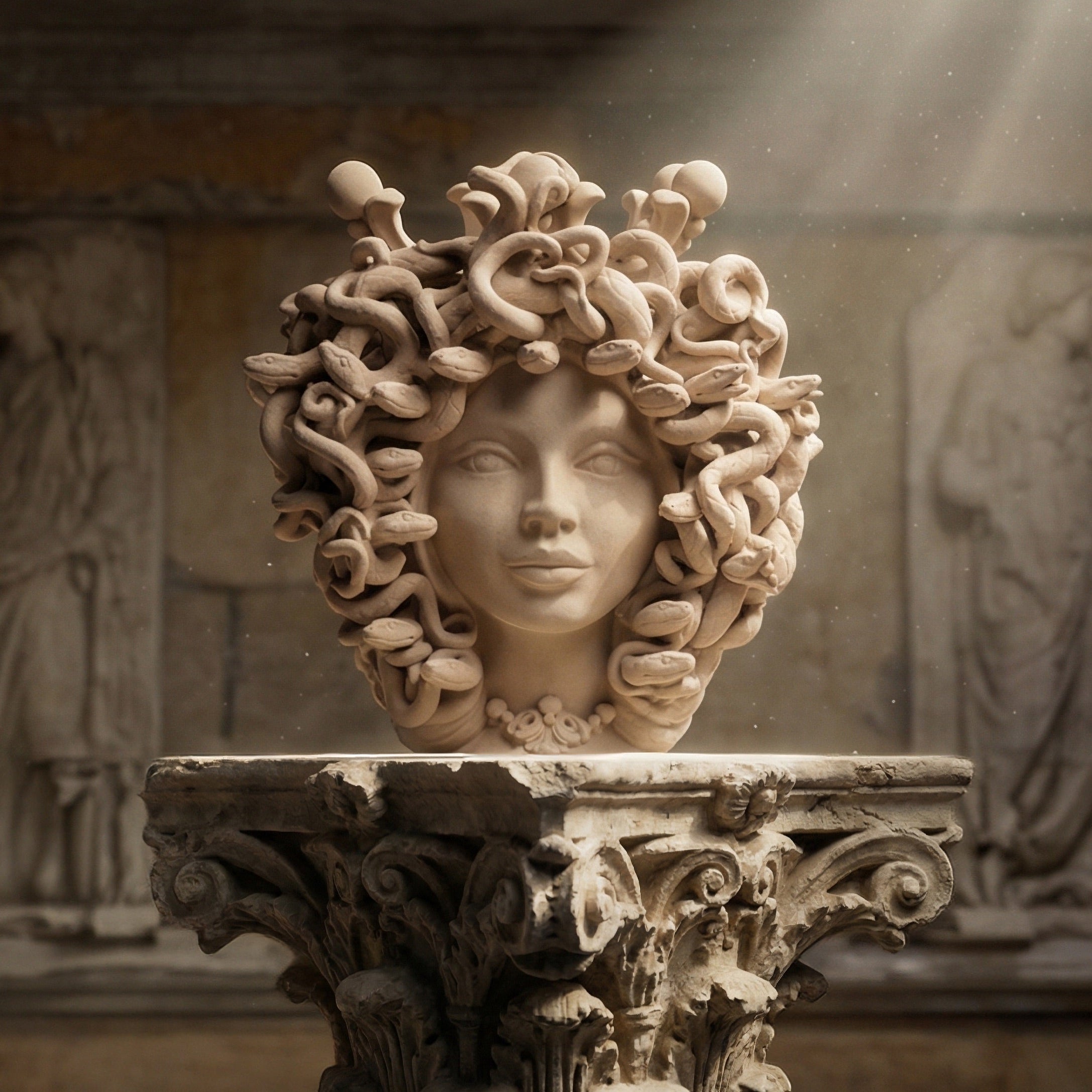
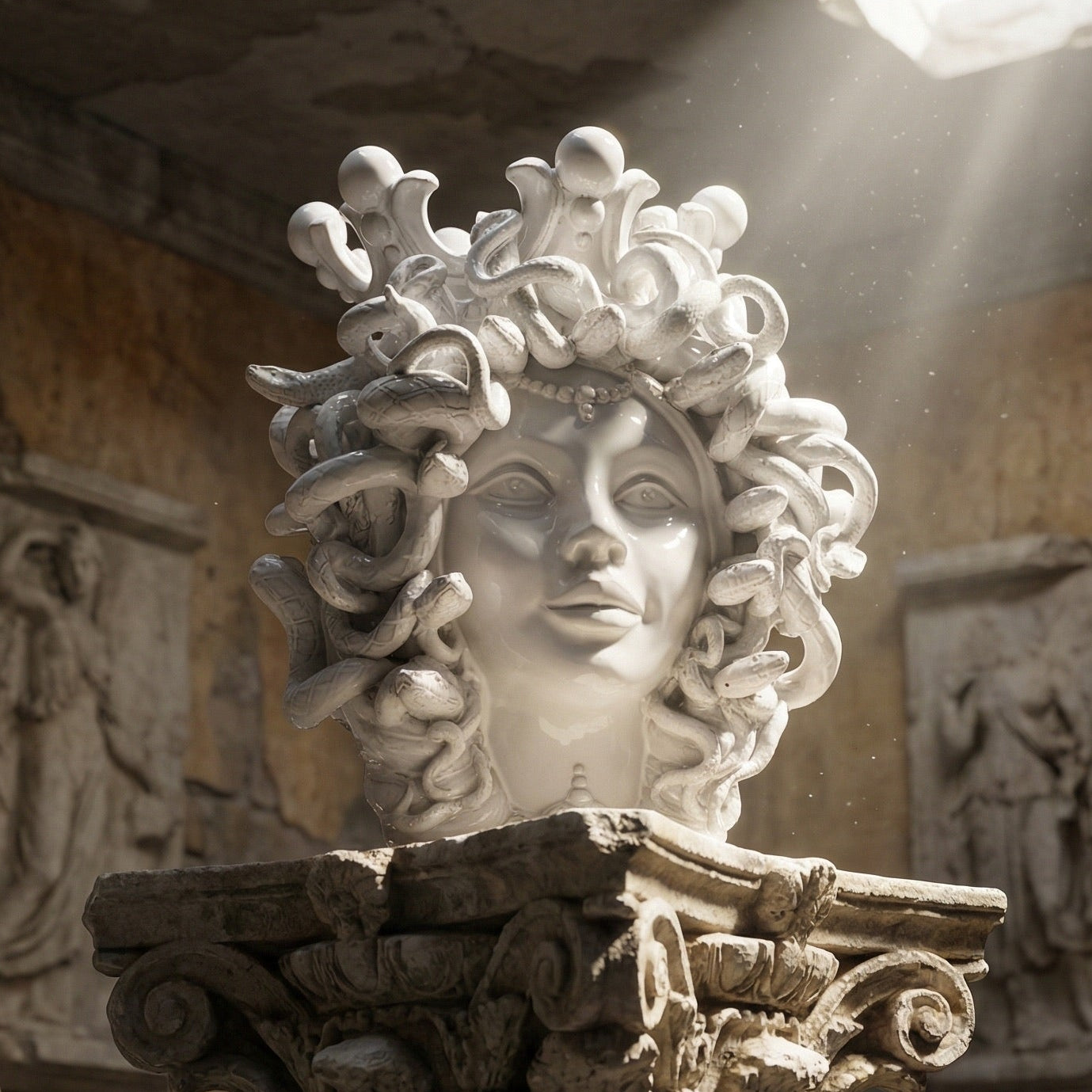
Medusa's physical end did not mark the conclusion of her devastating impact on the ancient world. On the contrary, her face became a symbol of pure terror, capable of annihilating anyone who dared meet her gaze. The powers of Medusa, in fact, did not vanish with her decapitation, but crystallized into a weapon of unheard-of power.
The Magical Power of the Severed Head
The Gorgon's severed head retained intact its ability to petrify enemies, transforming itself into a magical object of inestimable value. This supernatural force made the head an apocalyptic weapon, feared by heroes and deities alike. Anyone who had the courage to wield it could change the fate of entire battles in a single instant.
It was no longer just a hunting trophy, but a true instrument of strategic defense. The powers of Medusa, once freed from the body, became a constant threat to anyone in the path of those who possessed such a relic. Its mere presence was enough to paralyze entire armies, making possession of the head a dangerous privilege.
The Preservation of Power After Death
It is fascinating to note how the myth emphasizes the persistence of the sacred and the monstrous beyond the boundary of life. Even after death, Medusa's head continued to radiate its lethal influence, demonstrating that the powers of Medusa were linked to her divine essence and not only to her physical form. This continuity allowed the myth to evolve, transforming a monster into a powerful talisman.
The preservation of such energy ensured that the petrifying terror remained a central element in Greek culture for centuries. The fact that the Gorgon could still kill, despite being lifeless, fueled legends about the indestructible nature of evil and magic. Ultimately, the powers of Medusa found a new form of existence, becoming an eternal icon of defense and destruction.

The Strategic Use of the Severed Head Against Invaders
The myth of Medusa does not end with her death, but transforms into a powerful weapon of war. Once severed, the head of the Gorgon does not lose its supernatural nature, becoming an object of immense symbolic and military value. The ancient Greeks attributed to this trophy a unique capacity for divine protection against external threats.
The Aegis of Athena
The goddess Athena, symbol of wisdom and military strategy, chose to integrate Medusa's face into her equipment. By placing the head on her shield, known as the Aegis, the deity transformed an element of terror into a bulwark of defense. This gesture was not merely aesthetic, but represented the submission of primordial chaos to rational order.
"The Aegis, Athena's shield, bears at its center the face of the Gorgon, making whoever wears it in battle invulnerable."
Defending Cities with Petrifying Terror
The use of the severed head served as a psychological deterrent against enemy armies. The mere sight of the effigy, which recalled the legendary petrifying gaze, was enough to sow panic among the ranks of the invaders. Cities that displayed such a symbol implicitly declared their protection under the divine aegis.
This defensive strategy was based on a few fundamental pillars:
- Visual deterrence: The paralyzing terror halted the advance of enemies.
- Divine legitimation: The presence of the symbol confirmed the favor of the gods.
- Apotropaic power: The ability to ward off malign influences and attacks.
Ultimately, the myth demonstrates how fear can be converted into a form of collective security. Through the petrifying gaze, the Gorgon ceased to be a threat to become the silent guardian of Greek communities.
Symbolism and Meaning of the Myth in the Ancient World
The symbolism of the Gorgon represents one of the most fascinating dualities of Greek mythology. This figure was seen not only as a monster to be feared, but as an essential element for maintaining cosmic order and domestic protection.
Her face, capable of petrifying anyone who dared to look at it, became over time a powerful symbol of defense. The ancient Greeks attributed to this image a magical value capable of repelling negative influences.
Terror as Protection
The use of Medusa's head as an apotropaic amulet is a practice documented in many archaeological findings. The terror generated by her gaze was not an end in itself, but served to create a barrier against evil.
Here is how this protection was employed in daily life:
- On shields: To frighten enemies in battle and protect the warrior.
- On doors: To ward off evil spirits from private homes.
- On temples: To mark the boundary between the sacred and the profane, protecting the place of worship.
Medusa Between Monstrosity and Sacredness
The myth of Medusa constantly oscillates between her monstrous nature and an almost sacred dimension. This ambivalence is typical of Greek mythology, where the boundary between the divine and the terrible is often very thin.
The Gorgon is not only a being to be slain, but an entity that transforms death into a form of eternal security. Her image, though terrifying, guaranteed protection and stability to those who displayed it with respect.
Ultimately, the symbolism of the Gorgon teaches us that even what appears to be a danger can be transformed into an instrument of salvation. Her cultural legacy remains a unique example of how terror can be integrated into daily life for beneficial purposes.
Medusa in Contemporary Art and Culture
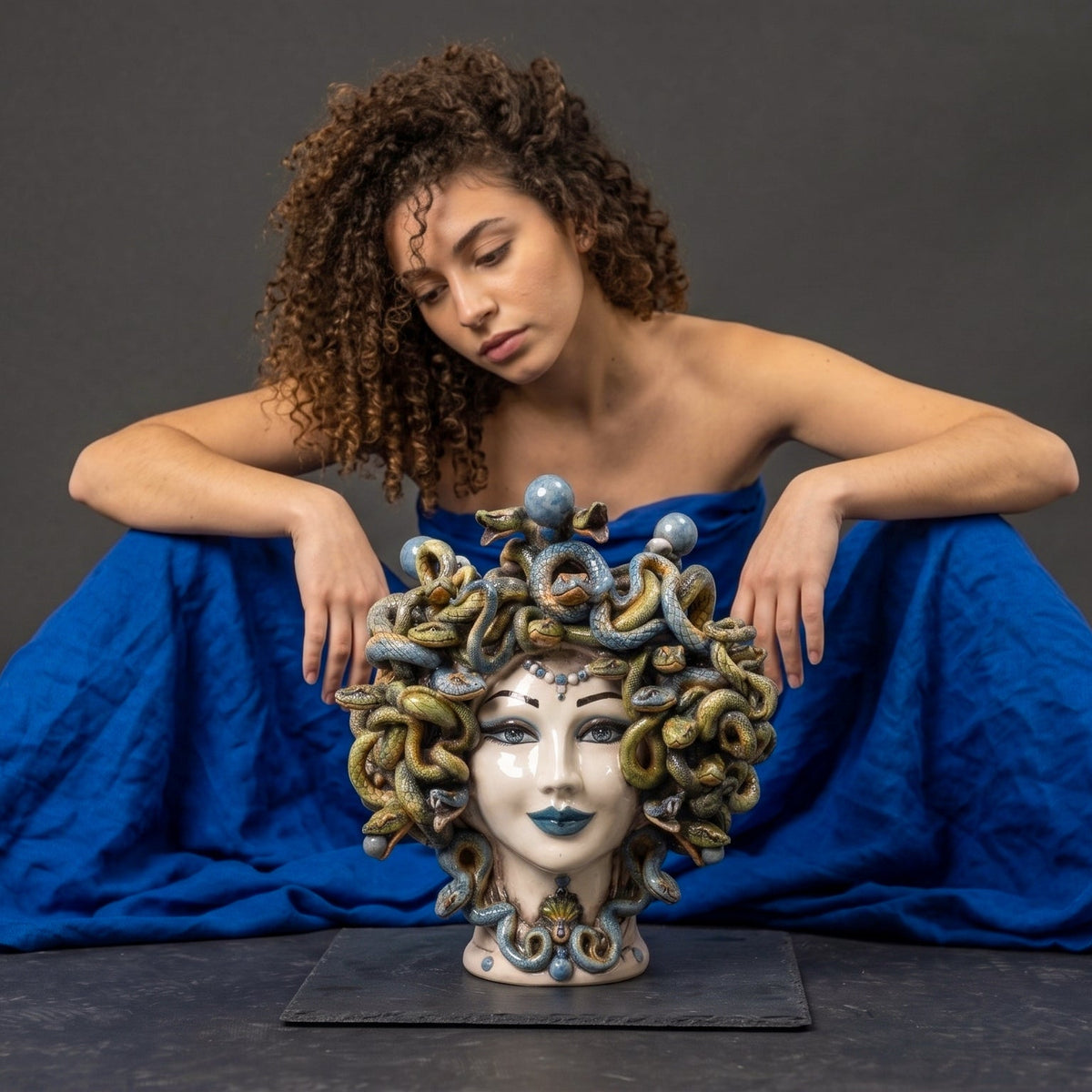
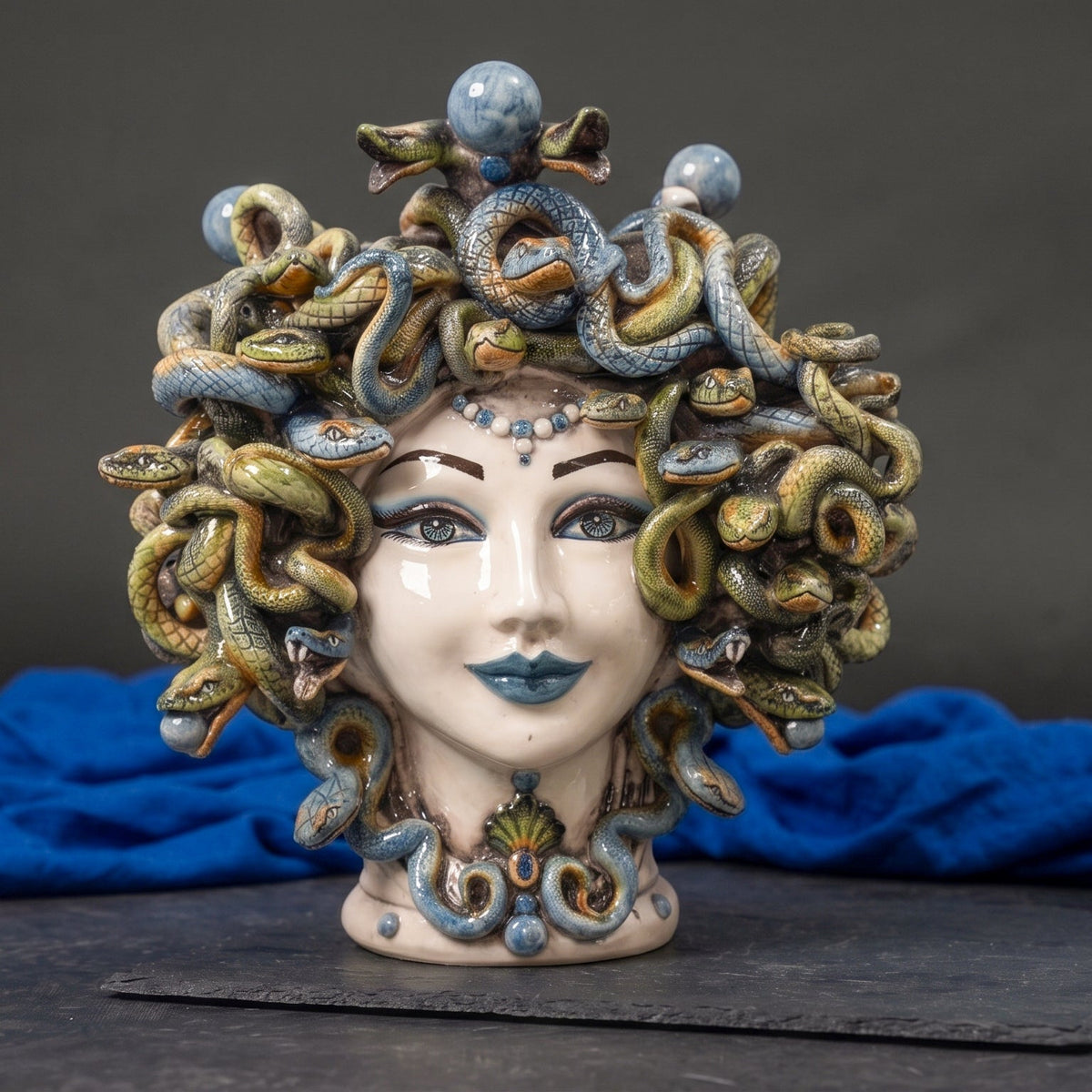
Over the centuries, the image of Medusa has transformed from a frightening monster into a symbol of profound human complexity. This mythological figure has crossed the boundaries of time, adapting to the various aesthetic and philosophical sensibilities that have characterized the history of humanity.
From Antiquity to the Renaissance
During the classical era, the Gorgon was often depicted as a terrifying being, destined to instill fear and protect sacred places. However, with the advent of the Renaissance, artists began to explore the tragic beauty hidden behind her petrifying face.
Masters such as Caravaggio knew how to capture the precise instant of pain and astonishment, transforming the monster into a subject of profound psychological introspection. In this period, Medusa was no longer just an enemy to be defeated, but a figure charged with pathos that reflected the anxieties of the human soul.
Medusa as a Modern Icon
Today, the perception of Medusa has undergone a further change, becoming a powerful symbol of resistance and female emancipation. Many contemporary artists see in her a victim of divine injustice, capable of reclaiming her own power through a gaze that defies patriarchy.
The myth continues to live on in collecting and pop culture, as demonstrated by the issuance of commemorative coins in 999/1000 silver planned for 2026. These objects celebrate the Gorgon no longer as a threat, but as a timeless cultural icon that continues to inspire new generations.
| Era | Main Perception | Symbolism |
|---|---|---|
| Antiquity | Terrifying monster | Protection and terror |
| Renaissance | Tragic figure | Pathos and introspection |
| Contemporary era | Icon of power | Resistance and femininity |
Conclusion
The legend of Medusa continues to exert a magnetic fascination on anyone who explores the roots of classical culture. This tale of transformation and power transcends the boundaries of time to still speak to us today of justice and resilience.
To analyze the figure of the Gorgon means to immerse oneself in a labyrinth of profound meanings. Every detail of her story invites reflection on how fear can become an instrument of defense or a symbol of identity.
The legend of Medusa lives on in the works of artists such as Caravaggio or in the modern interpretations of the Versace brand. These representations demonstrate how vital it is to keep alive the connection with the roots of the past.
We hope this journey has offered you valuable insights to look beyond the myth. Which aspect of this story struck you most during the reading? Share your reflections to enrich the debate on this timeless figure.


1 comment
Sikeliotai Polites
La nostra cultura, le nostre radici!!!
Comment
Note: comments must be approved before being published.
This site is protected by hCaptcha and the hCaptcha Privacy Policy and Terms of Service apply.